


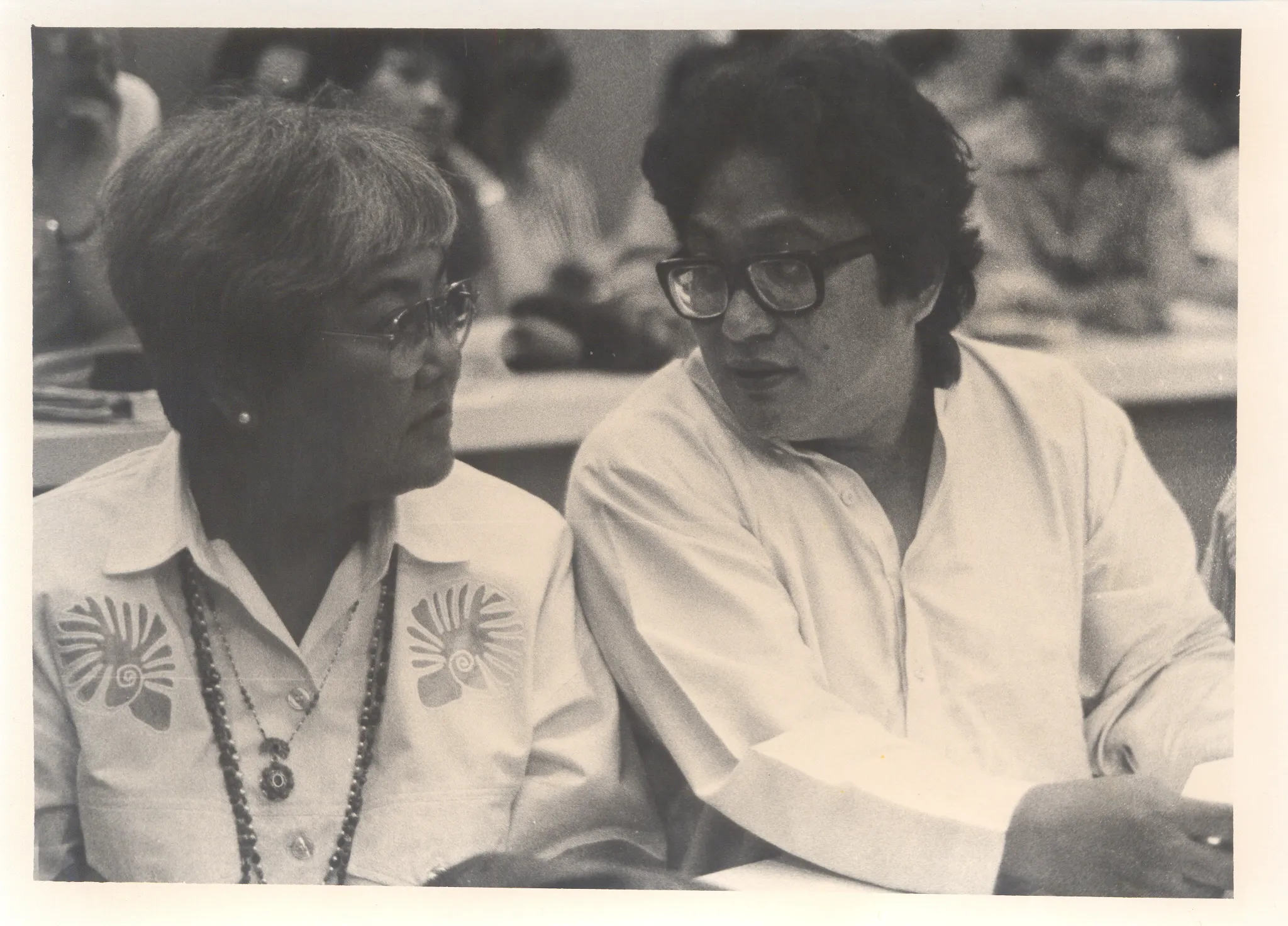
Doreen G. Fernandez
Doreen G. Fernandez and Edilberto N. Alegre: the iconic and recurring pair of co-authors, colleagues, and scholars in arms. Alegre called Fernandez his “indefatigable editor, dear friend, and comrade of many battles.”
Archival Pieces


Profile
A scholar of Philippine culture, literature, drama and theater, and culinary traditions, Doreen G. Fernandez was born in Manila in 1934, but grew up in her native Silay in Negros Occidental, which shaped her rural and regional sensibilities.
She earned a BA in English and History at St. Scholastica’s College in 1954 and an MA and PhD in Literature at the Ateneo de Manila University, with the poet Bienvenido Lumbera as her advisor. She married the interior architect Wili Fernandez, and it was when she and Wili were invited to co-write a newspaper column in 1968 on food that Doreen Fernandez’s thirty-four-year career as a food writer began.
With sparkling, limpid prose, Fernandez is remembered as an inimitable writer, but those who worked with her remember her still more fondly as a teacher. She was also an activist within the establishment, even as she headed off criticism that she was concerned with supposedly bourgeois topics.
She did not join the anti-Marcos underground, but she was their known ally within the classroom, instilling critical thinking in her students, founding the theater group Babaylan that staged plays critical of the dictatorship, and developing the long-running if submerged political arguments of her food writing, which carefully slipped past censors while remaining in plain sight.
She also aided the revolutionary movement outside the classroom, taking on the “special tasks” for the resistance and housing comrades resisting repression, cleaning their bullet wounds and providing safe harbor.
Fernandez was not the only food writer to emerge on the scene in her day, in fact she and Alegre are part of a rich food studies movement that came of age in the 1970s. But, De Leon notes that what set Fernandez apart was “her turn away from mere consumption toward the embodied aspects of food, from preparation to eating, within a matrix of Indigenous knowledges formed through the senses.”
And that, moreover, “her writings on rural food, especially from her home island of Negros, enable[d] her to chart a gastropolitics of the Philippines that locates the culinary labors of non-elite, non-urban women at the center of nation making.”
NOTE: This is an excerpt from our longer author profile which also features Fernandez’s coauthor, Edilberto N. Alegre.
Further Materials
2316 Chino Roces Avenue Ext.,
Makati, 1231 Metro Manila
mara@explodinggalaxies.com
