

1945
MANILA
Great Philippine Jungle Energy Café, 2026
Confessions of a Q.C. House-husband and Other Privacies, 1991
The Music Child and the Mahjong Queen, 2016
Alfred “Krip” A. Yuson
“Tempers, childbirths, sermons, swallows and crows, old lakes, young boys, pigs’ tails, mayors and mayors’ wives, silent enchantresses—everyone and everything! Agua de Mayo! The first rain of May. Water from the heavens as salve for spirit, colic, cough and cold. Water for the parched season of nothing to be thankful for. By tradition blessed and holy, oh, as the fluids of Mother Mary, o first rainwater of May, when all the dust fell prey to the rataplan, the drumming. First thick drops of prayerful water, prayed-for water, incantatory rainwater pirouetting on bodies sepia and streets dry as dust the begetter, raindrops, first raindrops of May!”
1945
MANILA
Profile
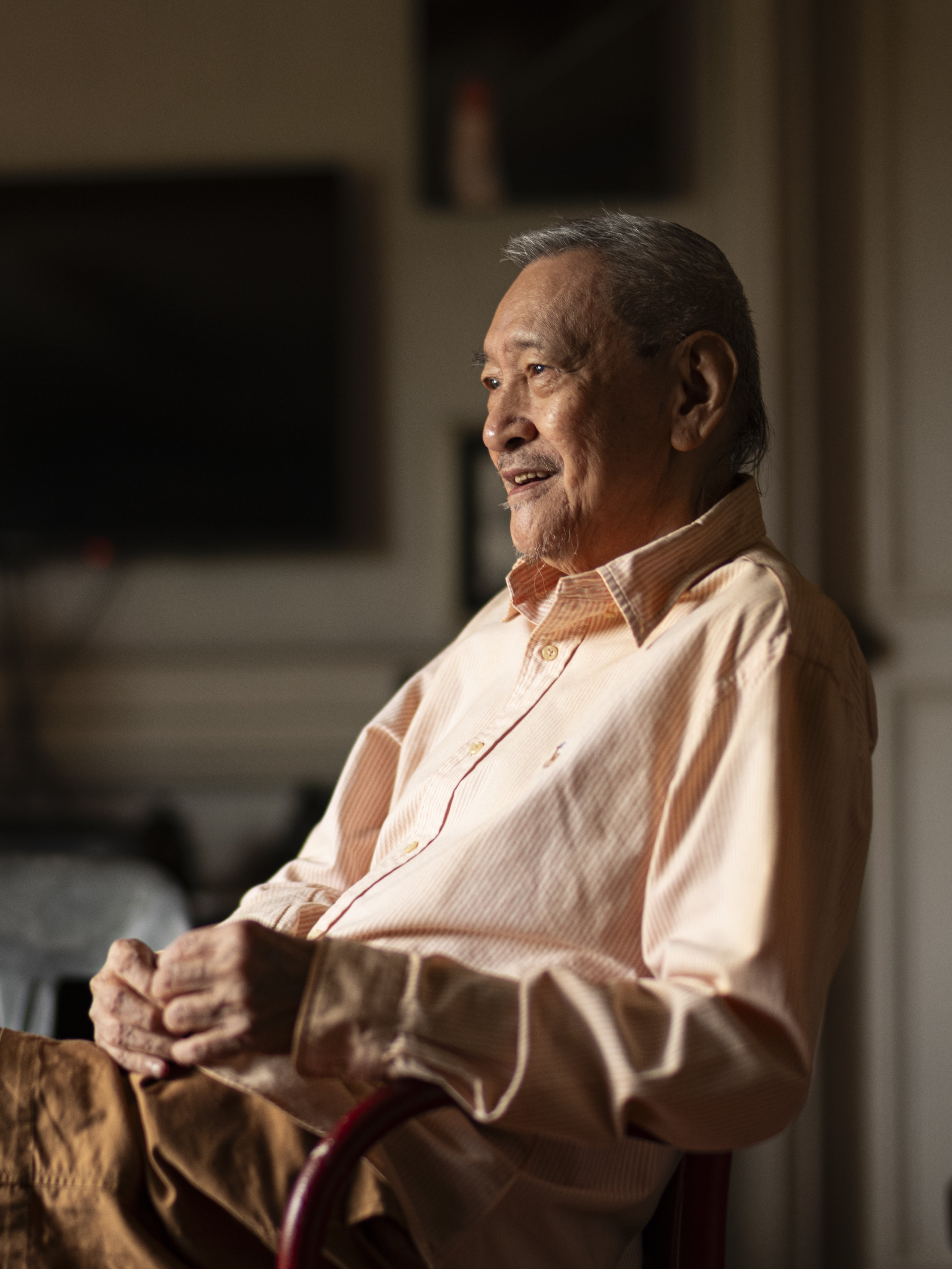
Alfred A. Yuson (fondly, though inexplicably, known as ‘Krip’) has a habit of humor and irreverence, one that is both awed yet nonchalant when it comes to the commonly strange and strangely common that wend through our islands.
His fascinations have spurred him to create over fifty books to date, ranging from novels, poetry collections, short fiction, essays, children’s stories, biographies, travelogues, translations, and screenplays to coffee-table books, in addition to documentary films. He also writes regularly for The Philippine Star and previously taught fiction and poetry at Ateneo de Manila University as the Henry Lee Irwin Professorial Chair. In all this coverage, Yuson gives us passage to see things anew, whether an aspect overlooked or a longstanding irony underappreciated.
Alfred A. Yuson’s Biography
Born at the close of World War II, Yuson grew up in Manila; and to him the residence of his great-aunt as close as Tugatog, Malabon “was already a distant country.” At age fifteen, before enrolling at the University of the Philippines, he spent a few summer months in that country and says he “resolved to try to become a writer, because I was such a reader.”
He frequented the library, reading through all the available volumes of the likes of The Hardy Boys, Nancy Drew, and The Rover Boys (earlier versions of the Nancy Drew and Hardy Boys from Stratemeyer Syndicate). Unabated, he then read through the Zane Grey westerns afterwards.
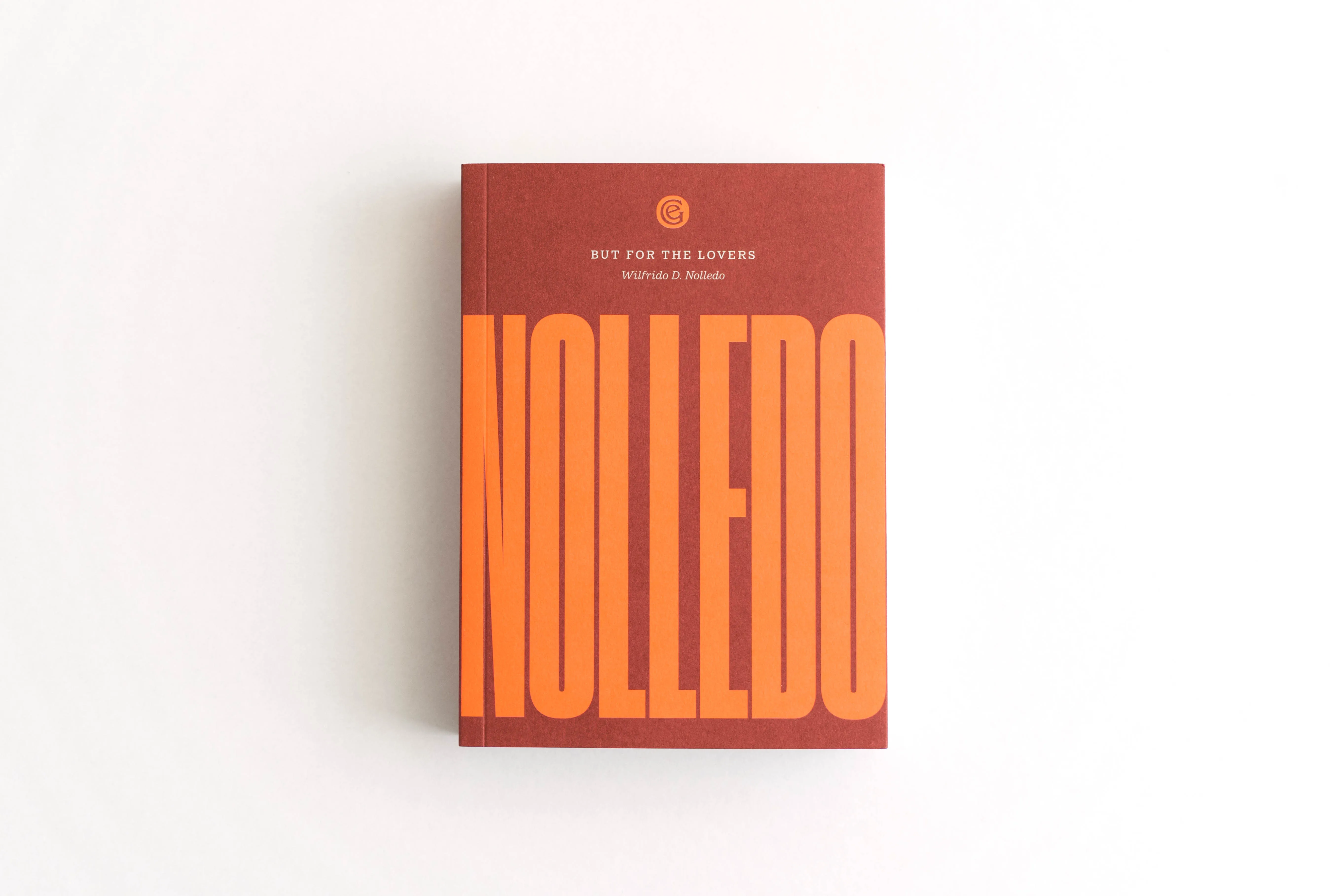
“So I loved to read,” he explained, “And at 15, I thought I could start writing a novel. That's why I went to this summer place.” It was “a modest bungalow [on] a large lot with a lot of trees. I loved being there. All I did for two and a half months was try to write, until I stumbled into some magazines, women's magazines, that my great-aunt brought home. And I read a story by a certain Wilfrido D. Nolledo. I was electrified. I said, my goodness, I can never write like this. Not at that point, anyway. At 15.”
Writing Career
Yuson won his first Carlos Palanca Memorial Award for Literature at 23 years old for his short story “The Hill of Samuel,” which placed third in 1968. He would go on to tie for first in the same category with Leoncio Deriada in 1975, but also to tie for first with himself in the English-language poetry category in 1978 with his collections 15 Poems and Icon Corner, only to go on to receive double awards in 1985 in the English-language poetry and English-language essay categories as well.
Small wonder then that upon his 2001 first place award in the English poetry division, he also earned a place in the Carlos Palanca Memorial Awards Hall of Fame. (Beyond the iconic Palanca, Yuson has received countless other awards, including the S.E.A. Write Award from Thailand royalty for lifetime achievement.) For its part, Yuson’s masterpiece, Great Philippine Jungle Energy Café, won the Grand Prize for the Novel in 1987, and it is Exploding Galaxies’ great honor to reissue this timeless work.
Krip Yuson in the Literary Scene
Yuson is a founding member of the Philippine Literary Arts Council, Creative Writing Foundation, Inc., and Manila Critics Circle and has served as Chairman of UMPIL and as a board member of the Movie and Television Ratings and Classification Board. Among the seminal periodicals he helped to conceive and lead as Editor-in-Chief are: Ermita, a counterculture monthly (1976–77); Jose: An Art and Literary Quarterly (1982–83); Caracoa: The Quarterly Poetry Journal of the Philippine Literary Arts Council (1983–2011); San Juan: The Liberated Bimonthly Magazine of Art (1984–86) published by Pinaglabanan Galleries ; The Evening News (1996-97); and Santelmo: Liwanag sa Dilim (2022–present).
When Angelo R. Lacuesta asked Yuson and his co-founder Gemino H. Abad about the creation of Caracoa and the poetry scene at the time, Yuson explained: “The Silliman workshop was already there. But we were aware that it was our first poetry journal. … There were hardly any poetry readings anywhere, not even in Manila…no spoken word series, no nothing. Not even at Café Indios Bravos … Our readings were well attended because the local poets would also read, not just us.” But out of this tumult—the decade and a half of martial law and the fall of the dictatorship—one of the great Philippine novels, the Great Philippine Jungle Energy Café, was born.
Great Philippine Jungle Energy Author
Though Yuson gave form to the Philippine literary scene for decades, his writing stands apart from the many scenes he shaped. His particular alloy of wit, sarcasm, elegance, word play, bombast, and irreverence is all his own. As Danton Remoto put it, explaining Yuson’s prose achievement in Great Philippine Jungle Energy Café:
Like E.L. Doctorow’s watershed novel, Ragtime, Yuson mixes people both imaginary and real, dead or alive, where the linear concept of time itself has melted: scenes shuttle back and forth with the fluidity and grace of cinema. There are close-ups, faded outs and dissolves, and long shots. The technique implies that nothing is lost; the collective mind is a sponge that retains everything. There are audacious word-plays and puns that remind us of Wilfrido D. Nolledo’s Filipino baroque magnum opus, But for the Lovers. Then there is prose which, in places, is as intricate and elegant as Nick Joaquin’s The Woman Who Had Two Navels. But Yuson also adds his own language: at first vibrant with nervous, even erotic, energy…and then later, lolling about in ‘an imperial form of sadness.’
The language also bites, Remoto notes, as seen in the novel’s allusion to the late dictator Ferdinand Marcos Sr.: “Presidential proclamations [were] issued as so much loaves of bread in a variety of circuses.”
Then there is the plot, which is even more audacious than its form—a fantastical conceit underpinned by serious societal commentary. “The novel chronicles the amazing life of Leon Kilat: sacristan, Singer sewing-machine salesman, circus performer, lover, and revolutionary,” Remoto describes; “Leon mirrors the Filipino’s many masks, worn because of the quirks and accidents of our history and heritage.”
Yuson even includes a book-within-a-book in the form of the screenplay being put to paper about the protagonist of Great Philippine Jungle Energy Café in one of its various timelines. Speaking of time, the novel is structured as a full circle: the beginning is the end and the end is the beginning. Similarly, fact and fiction meet hands, bleeding into each other.
The result is serious but playful, maybe even ridiculous. His approach was criticized by some at the time for being trivializing, but isn’t that what gives laughter its subversive power? Anyway, why are we so prickly, if things are really so glorious? It is in this vein that the writer Nicola Sebastian referenced Mikhail Bakhtin’s conception of the medieval carnival (a feast of inversion and a parody of high culture) and the carnival’s principle of laughter as a way to understand what Yuson is doing.
For Bakhtin, laughter deals with processes of change and crisis, effecting a shift in authorities, orders, and truth, even if only subtly. Under such a paradigm, the connection that Daryll Jane S. Delgado drew between Erwin Castillo’s The Firewalkers and Yuson’s Great Philippine Jungle Energy Café gains sense: seeing fantasy as a narrative of subversion, working within what are historiographic metafictions—fictional histories of our history.
Hardly trivializing, Christopher B. Patterson argues that, “Yuson’s The Great Philippine Jungle Energy Café reinterprets the Philippines’ revolutionary history by resisting notions of revolution as naturally progressive,” “and rather sees them as re-occurring motifs that reproduce different forms of Filipino subjectivity.” As Nick Joaquin says in his original preface to the novel: “In the world [the novel] creates, everything is happening under the light of eternity. So side by side occur the Revolution of ’96, the demonstrations against Marcos of the ’80s, and banditry in the boondocks against the Guardia Civil.”
Conclusion
Yuson, the veteran poet, does not undercut history, but, in Alma Anonas-Carpio’s interpretation, actually becomes our town bard. He urges us to continue to feel it, and makes sure no one forgets what occurs on these shores. In his poem “Being a Hero,” he declares: “I need you to understand/how helpless we feel. How our boxes of mineral water, biscuits,/candlesticks and matches seem like such a weak salve against/the brutal violence that nature has unleashed upon our brothers/and sisters. I need to tell you, wishing there were more I could do.”
There is always more one could wish to do, but what he did do was observe, write, and remember, and that is not nothing. As Anonas-Carpio puts it, reflecting on one of his poetry collections, Islands of Words & Other Poems: “he has given this nation a book, one that I bought for a song—for stories so well told in poems as fine as these are priceless and mere currency does not measure their value.”
In fact, Yuson’s wit and lyric boisterousness have much to do with his achievements. Vicente G. Groyon III called him the only Filipino poet who is intimidating and inviting in equal measure, and this is quite a good trick. How long have historians of the Philippines who merely “do” history lamented that no one cares about, remembers, or reads our history? So, here’s to tricks new and old; we needed a bard all along.
-
[1] Alfred A. Yuson, Great Philippine Jungle Energy Café (Exploding Galaxies, 2026).
[2] Alfred A. Yuson, “At CDL Launch,” May 9, 2026, transcript and video.
[3] Angelo R. Lacuesta, “Interview with Gemino H. Abad and Alfred A. Yuson on July 13, 2015 at Krispy Kreme, Pasig City,” Perspectives in the Arts and Humanities Asia 5, no. 2 (2015), 152.
[4] Danton Remoto, “A Book of Laughter and Memory,” The Philippine Star, October 23, 2015, https://www.philstar.com/opinion/2015/10/23/1514106/book-laughter-and-memory.
[5] Remoto, “A Book of Laughter and Memory.”
[6] Nicola M. Sebastian, “The Fruits of Laughter: The Carnival World of Humor and Hybridity in Yuson’s Great Philippine Jungle Energy Café,” March 3 2008, https://www.scribd.com/document/323695836/The-Fruits-of-Laughter-The-Carnival-World-of-Humour-and-Hybridity-in-Yuson-s-Great-Philippine-Jungle-Energy-Cafe.
[7] Sebastian, “The Fruits of Laughter,” 5-6.
[8] Daryll Jane S. Delgado “Narratives of subversion the fantasy mode in Philippine contemporary fiction in English,” (master’s thesis, University of the Philippines, 2008), https://tuklas.up.edu.ph/Record/UP-99796217610456440.
[9] Christopher B. Patterson “Transitive Cultures: Anglophone Literature in Malaya, the Philippines and Asian America,” (Phd diss., University of Washington, 2013). https://digital.lib.washington.edu/server/api/core/bitstreams/0335e39e-0727-4661-9d2c-3123d3abe1aa/content, 107.
[10] Quoted in Alma Anonas-Carpio, “Gems of these isles: Alfred Yuson’s Islands of Words” The Philippines Graphic Magazine (February 15, 2016).
[11] Ibid.
[12] See Vicente G. Groyon III, “Lyricism and Logic: Alfred A. Yuson's Poetic Influences,” Likha 18, no. 1, (1998): 48, https://ejournals.ph/article.php?id=3305.